New Flora chapter published, June 2015

Pultenaea penna, described in 2003. Photo: T.J. Horn.

The new, 5th edition of Flora of South Australia is published online in PDF-form. Today, 30 June 2015, the State Herbarium of South Australia released a revised version of the chapter on the plant family Fabaceae (peas). In addition to the existing treatments of the tribes Bossiaeeae & Brongniartieae (by I.R. Thompson) and Indigofereae (by P.G. Wilson), this chapter now also includes the tribe Mirbelieae. With 13 genera and species, this is the largest group of native peas. It was mainly written by Andrew Craigie, Peter Lang co-authored the genus Pultenaea and up-dated Dillwynia together with Jürgen Kellermann.

Flora of South Australia (5th edn): Fabaceae (Leguminosae) (partly) (version 2) (33.5MB)

The general link to the 5th edition of Flora of South Australia is flora.sa.gov.au, providing current treatments, glossary, introduction and cover pages for printing. Previous versions of Flora treatments are still available from our Superseded treatments page.
New Journal article: June 2015

Kantvilas & Wedin Arthonia insularis

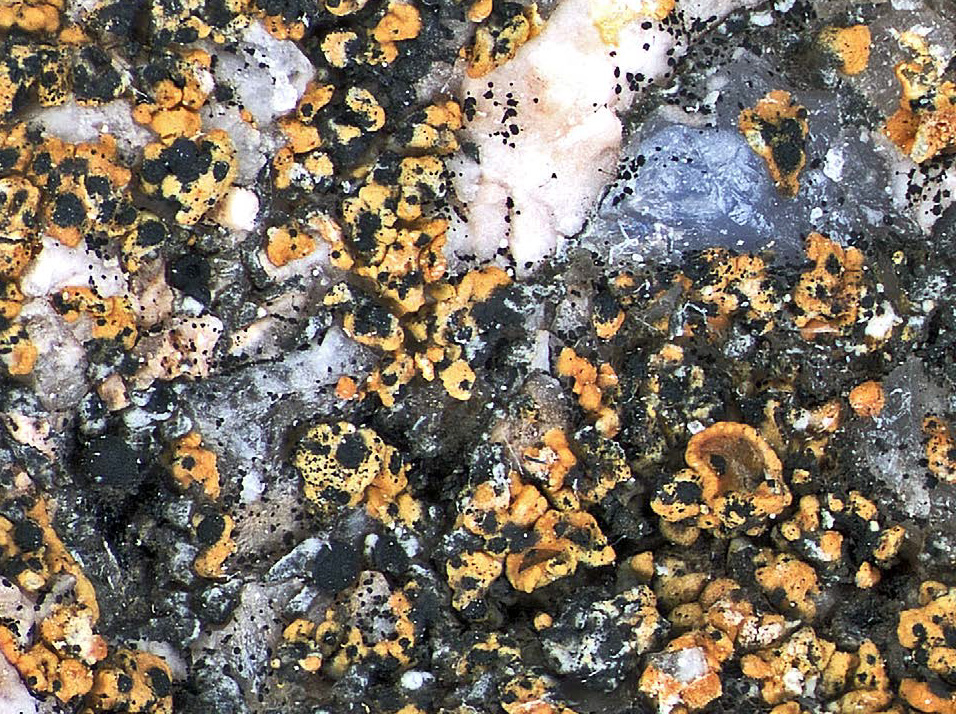
Parasitic fungus Arthonia insularis (black spots) growing on a yellow lichen. Photo: G. Kantvilas.

The first article of Vol. 29 of the Journal of the Adelaide Botanic Gardens was published online today.  Gintaras Kantvilas, Tasmanian Herbarium, and Mats Wedin, Swedish Museum of Natural History, describe two species of fungi, which grow parasitic on lichens in Kangaroo Island.

G. Kantvilas & M. Wedin
Lichenicolous species of the Ascomycete genus Arthonia Ach. from Kangaroo Island
(1MB PDF)

To access content of all volumes of the Journal of the Adelaide Botanic Gardens since Vol. 1 (1976), please visit the journal’s web-site at flora.sa.gov.au/jabg (the Journal is also available through JSTOR).

The Herbarium at the Museum

Science & Art: 12 years of the Waterhouse Prize is currently on display at the South Australian Museum. The Waterhouse Natural Science Art Prize was launched in 2002. The exhibition features the overall winning works from the last 12 years, paired with material from the collections of the South Australian Museum, National Archives of Australia, the State Herbarium of South Australia and State Records of South Australia. The exhibition is on display until Sunday 19 July. The Museum is open 7 days, 10am – 5pm. Entry to the Museum and the exhibition is free.

Several specimens from the State Herbarium are on display along with the artwork to illustrate and explain the connection between science and art. Two examples are featured below.

Waterhouse 1 (small)

Anatye by Margaret Loy Pula. Photo by Tim Gilchrist (SAM).

Above is Margaret Loy Pula’s artwork Anatye (Bush Potato), overall winner of the 2013 Waterhouse Prize, with a specimen of bush potato (Ipomoea costata) from the State Herbarium.

Nikki Main’s work Flood Stones (below) was the overall winner of the 2010 Waterhouse Prize and references flood as an important phase in the hydrologic cycle. It is paired with examples of ephemeral plants from the collection of the State Herbarium: Pink tongues (Rostellularia adscendens var. pogonanthera), curly flat-sedge (Cyperus rigidellus), downy cress (Phlegmatospermum cochlearinum), button grass (Dactyloctenium radulans), cup velleia (Velleia connata).

Waterhouse 2 (small)

Flood stones by Nikki Main. Photo by Tim Gilchrist (SAM).

Cactus book launched

IMG_8551 edit crop (small)

Bob Chinnock during the book launch

On Friday evening, 19 June 2015, Bob Chinnock‘s new book on weedy opuntioid cacti was launched by Michelle Waycott, State Herbarium of South Australia, and John Virtue, Manager NRM Biosecurity. Over 30 colleagues and friends of Bob gathered to celebrate this achievement.

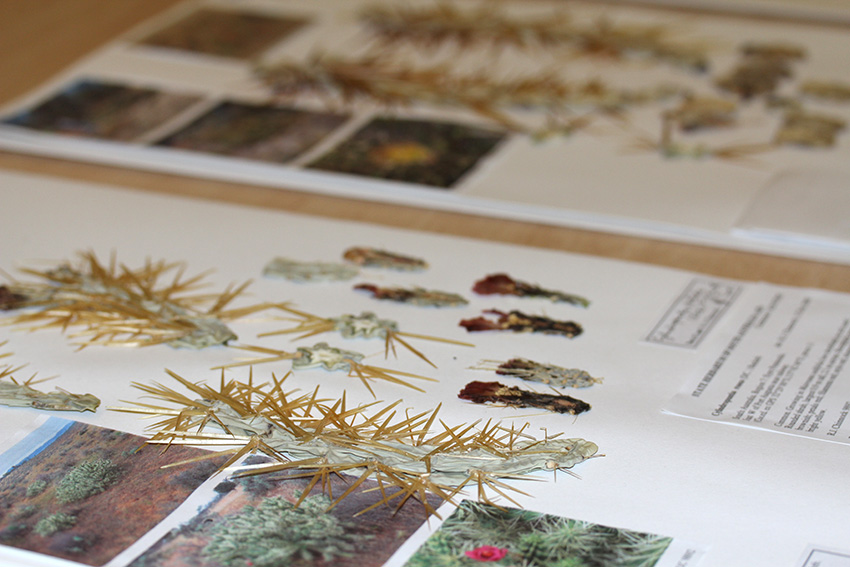
Feral opuntioid cacti of Australia is published in two parts. The first part, covering the cylindrical stemmed genera Austrocylindropuntia, Cylindropuntia and Corynopuntia is now available. The book includes many colour photos, detailed line-drawings and descriptions of the cacti’s stems, fruit and flowers, as well as information on suitable controls and the occupational health and safety issues associated with dealing with them. The second part, containing the flat stemmed genus Opuntia (incl. Nopalea), is currently in preparation.

More information on the book and how to purchase it can be found on the following web-page: know.ourplants.org/cacti/.

IMG_8565 edit (small)

Herbarium specimens of opuntioid cacti on display during the book launch, Cylindropuntia pallida in foreground (formerly C. rosea)

From snow melt to seashore: fungal tales from the land of the long white cloud

It’s All About the Plants
Tuesday, 16 June 2015, 10:00–12:00
Ground Floor Meeting Room / Tea-room,
State Herbarium of South Australia,
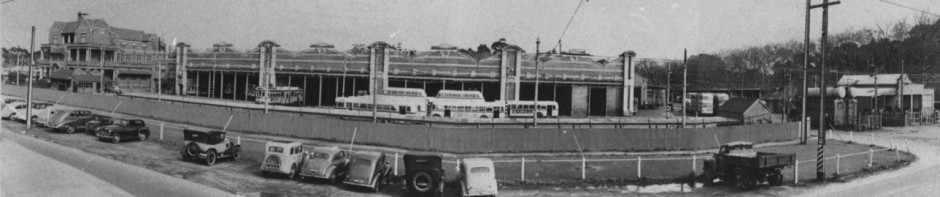
Old Tram Barn Building, Hackney Road

by Teresa Lebel
Senior Mycologist , National Herbarium of Victoria, Royal Botanic Gardens, Melbourne

I have just returned from a two year fellowship in New Zealand, where I was fortunate to be able to work on a series of different projects and travel quite a bit around the islands. New Zealand has an amazing range of ecological zones and a diverse plant flora (including many introduced species), all of which provide an array of substrates and hosts for fungi. While my particular research interests are focused on the taxonomy and phylogenetic relationships of truffles and truffle-like fungi, I am also intrigued by interactions between fungi and other organisms, whether positive or negative, or in balance. In this talk I will provide snapshots of a series of fungal projects; and every completed project generates many more questions!

All Herbarium staff, honoraries, volunteers, students and guests welcome.
Morning tea provided.