New journal articles: Nov. 2015

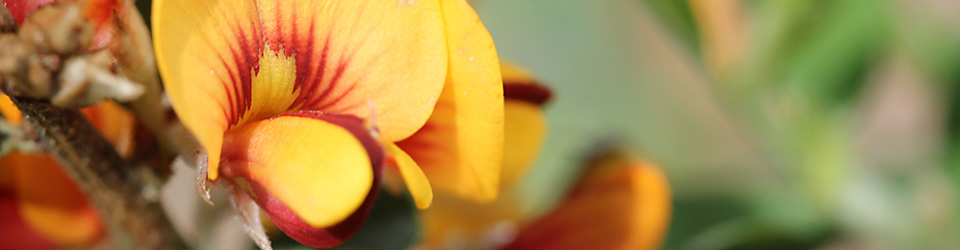
Hibbertia spanantha Toelken & A.F.Rob.

Today, the Journal of the Adelaide Botanic Gardens released three articles online:

To access content of all volumes of the Journal of the Adelaide Botanic Gardens since Vol. 1 (1976), please visit the journal’s web-site at flora.sa.gov.au/jabg (the Journal is also available through JSTOR).

Salt marsh restoration on Torrens Island

It’s All About the Plants
Tuesday, 3 November 2015, 10:00–12:00
Ground Floor Meeting Room
State Herbarium of South Australia
Old Tram Barn Building, Hackney Road

by Doug Fotheringham
State Herbarium of South Australia

Turning sand dunes into salt marshes on Torrens Island. What happened then and how does it look 25 years later.

Doug is the newly appointed Hon. Research Associate of the State Herbarium of South Australia and will speak about his involvement with the restoration of the vegetation of the island and his recent visit in Aug. 2015.

The same site on Torrens Island in 1988 (left) and 2015 (right). (Photos D. Fotheringham)

All Herbarium staff, honoraries, volunteers, students and guests welcome. Morning tea provided.

Seminar postponement

Please note that the next It’s All About The Plants seminar has been postponed until next month. On Tuesday, 3 November Doug Fotheringham (our newest State Herbarium Honorary Research Associate) will give a presentation.

Life in the sea: A mini-mesh plant

State Herbarium Hon. Associate Bob Baldock from our Phycology Unit provided these photographs of Thuretia australasica.

This small, red alga was found attached to the stems of a seagrass collected at the Head of the Great Australian Bight in 2010. At first glance the plant appears mundane, even uninteresting.

But, under the microscope, a delicate mesh of microscopic threads forming the small, hollow, cylindrical plant body is revealed, another example of the surprises awaiting us in the microscopic world. (Note that the white, glassy particles are sand grains trapped in the mesh and not part of the alga.)

Thuretia 3Click here for a detailed description of the species from the online version of Prof. H.B.S. Womersley‘s Marine benthic flora of southern Australia.  More images can be found in Bob Baldock’s Algae revealed fact-sheet “Pictured key to some common re-mesh algae of southern Australia” (1.3MB PDF).  A detailed colour plate from W.H. Harvey‘s Phycologia australasica is available from the Internet Archive (under the name Thuretia teres).

Ecology in Australia and elsewhere

It’s All About the Plants
Tuesday, 8 Sep. 2015, 10:00–12:00
Goodman Building Lecture Theatre,
adjacent to the State Herbarium of South Australia
Adelaide Botanic Garden, Hackney Road

by José Facelli
Ecology & Environmental Science, The University of Adelaide

The traditional view of ecologists is that vegetation is determined by the environment. However, there is strong evidence that individual plants can actually modify the local environment and that these modifications can have profound effects on the rest of the plant community and on ecosystem function. Importantly plants introduce spatial heterogeneity into the environment, which in turn helps to maintain diversity by creating patches that favour different species.

Almost without noticing I have been addressing these issues for over 20 years. I welcome this opportunity to bring together and share research done by myself and other members of my laboratory. I will show how living (and dead!) plants can drive ecological processes, and the importance of this for management, conservation and restoration of native vegetation.

Associate Professor José (Jope) Facelli studied Agricultural Sciences at the University of Buenos Aires, but soon become bored of crops and interested in natural ecosystems. This lead to research on the effects of grazing in Patagonia and in the Pampas. He eventually completed a PhD (Rutgers, The State University of New Jersey) on the effects of leaf litter on successional processes. In 1992 he moved to Adelaide where he established the Terrestrial Plant Ecology Lab. Currently the research in this laboratory includes topics as diverse as the role of soil microbes in plant invasions, the effects of fire on populations of orchids and their pollinators, and the interactions between plant parasites and their hosts.

All Herbarium staff, honoraries, volunteers, students and guests welcome. Morning tea provided.