Did you know this book?

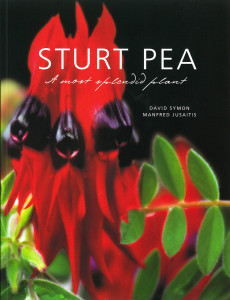
SturtPea 100dpi levelsA few years ago, the Board of the Botanic Gardens and State Herbarium published an authoritative account of the South Australia’s floral emblem, Sturt’s desert pea (Swainsona formosa), one of Australia’s most striking and recognisable flowers.  Written by the late David Symon (former Hon. Research Associate of the State Herbarium) and then Botanic Gardens staff member Manfred Jusaitis, the book gives an insight into the botany of the plant, its discovery and naming, and discusses its biology, propagation and cultivation.  The volume also features chapters on the Sturt pea as a State flower, and its use in decorative and commercial art and literature.  It contains a wealth if knowledge about this plant and is profusely illustrated with many colour illustrations and photographs.

Symon, D. & Jusaitis, M. (2007). Sturt pea: a most splendid plant. (Board of the Botanic Gardens & State Herbarium: Adelaide). 151 pp.

While this is not a new release, it still is the only in-depth account of South Australia’s floral emblem.  It was published in three editions, softcover ($39.95), hardcover ($50) and leather bound ($150), and all three editions are still in stock and available for purchase.  The book makes a great present for friends and family, too.

Volunteers and staff members of the State Herbarium of South Australia are eligible for a discount on this publication.  Please speak to Jürgen Kellermann for more information.  For a list of all books published by the State Herbarium, please go to flora.sa.gov.au/publications.
Many arms (and legs) make light work!

Crowdsourcing the digitisation of invertebrate collections at the South Australian Museum

It’s All About the Plants
Tuesday, 5 May 2015, 10:00–12:00
Goodman Building Lecture Theatre,
adjacent to the State Herbarium of South Australia
Adelaide Botanic Garden, Hackney Road

by Alexis Tindall
South Australian Museum

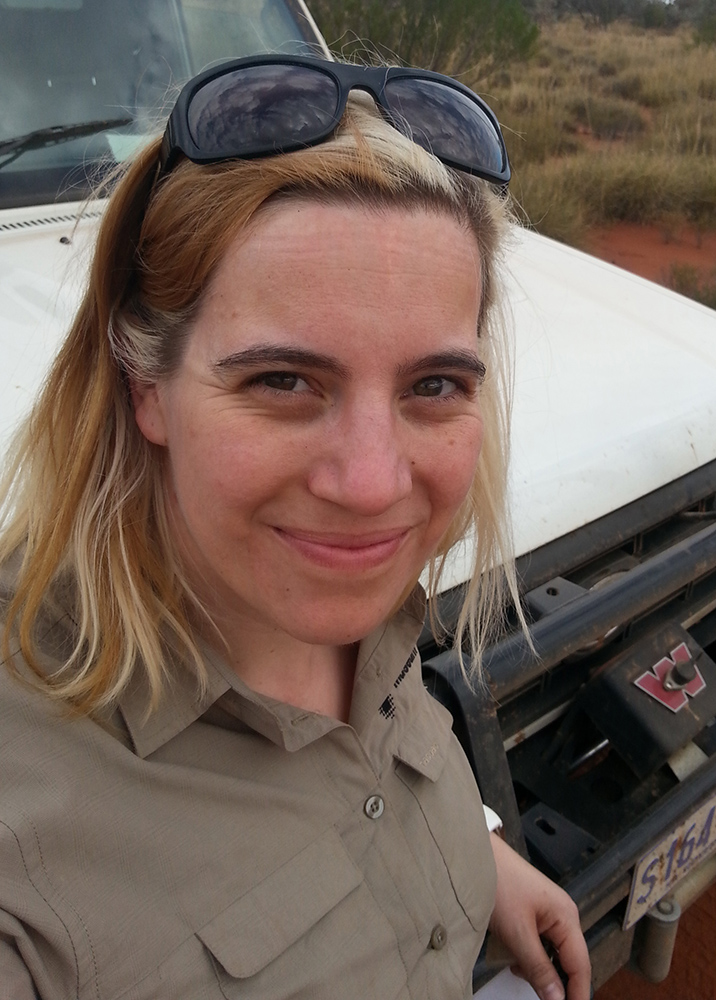
Photo: Alexis Tindall

New technologies have the potential to make museum and herbaria collections useful in new ways, and expose them to new audiences, but making our collections digital is a huge challenge for these organisations.

The South Australian Museum has, like many museums around the world, turned to online volunteers as one way to speed the digitisation of our collections. Alexis Tindall, Project Manager, will share her experience using the DigiVol crowdsourcing portal to digitise the museum’s marine and terrestrial invertebrate collections. She’ll talk about the benefits and opportunities of crowdsourcing, as well as the challenges they encountered along the way.

Alexis Tindall joined the South Australian Museum in late 2010 to establish a volunteer program to digitise terrestrial invertebrate types for delivery online through the Atlas of Living Australia. Volunteers in that program create thousands of high resolution digital photographs and database records to make these taxonomically significant specimens more discoverable and accessible. Since then the digitisation project has expanded to provide images on demand to inquiring researchers for analysis and publication, exploring crowdsourcing as a method of rapid digitisation, and the development of digital products such as the Field Guide to the Fauna of South Australia app.

All Herbarium staff, honoraries, volunteers, students and guests welcome.
Morning tea provided.

State Herbarium Open Day

About time bannerThe State Herbarium of South Australia will be open to the public on 9 & 10 May 2015 as part of the About Time: South Australia’s History Festival.

The heritage-listed 1909 Tram Barn A was once part of a complex housing the Adelaide tram fleet.  Now the State Herbarium, it houses over one million plant specimens instead. See some of the first plants collected in the state on Matthew Flinders’ voyage and learn how all these dried specimens are critical to the effective preservation of living plants.

Read more about Tram Barn A (1.15mb pdf), the State Herbarium (733kb PDF) and the over one million plant specimens (561kb pdf) in booklets published by the institution.

Guided walking tours will be available on both 9 & 10 May at 11am & 1pm (duration 45-60 min, max. 15 persons per tour).

Bookings are essential.

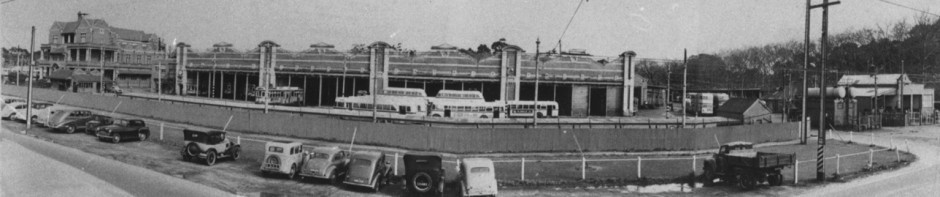
cropped-cropped-Hackney-Pano-1956.jpg

Tram and bus depot, Hackney Road, 1956 (photo: DEWNR).


New book at the printer

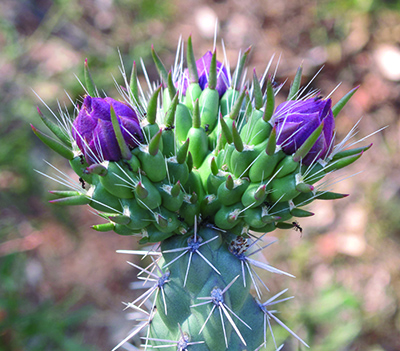
Cylindropuntia spinosior, buds

For many years, State Herbarium Hon. Associate and former staff member Bob Chinnock has undertaken research on opuntioid cacti in Australia (prickly pears and relatives). The first part of his revision of the feral opuntioid cacti in Australia, containing the cylindrical-stemmed genera Austrocylindropuntia, Cylindropuntia and Corynopuntia, will be published soon.

Opuntioid cacti are some of the worst weeds in Australia. This book will be an essential reference tool for land owners and managers, staff of government agencies, conservation groups, people involved in bushcare, and anyone concerned with identifying and eradicating weedy cacti. It will also be a valuable addition to libraries of ecologists and botanists, and people interested in cacti and succulents.

Please go to know.ourplants.org/cacti for more information and to register your interest, so we can notify you by email once the book is published.

Plant DNA barcoding in the genomics era

It’s All About the Plants
Tuesday, 14 April 2015, 10:00–12:00
Goodman Building Lecture Theatre,
adjacent to the State Herbarium of South Australia
Adelaide Botanic Garden, Hackney Road

by Ed Biffin
State Herbarium of South Australia

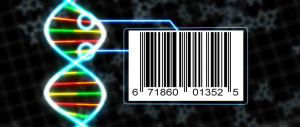
Barcoding DNADNA sequences have long been used to identify biological specimens. The DNA Barcoding initiative has sought to standardise this process through the development of one or a few short regions of DNA that can be routinely obtained from all living species and can distinguish among them. The ‘official’ plant DNA barcode, comprising two DNA fragments from the chloroplast genome, has several favourable qualities but also has limitations. With the recent development of new sequencing technologies, the availability of genome scale data has dramatically increased. Ed will talk about these developments, and how new sources of data may be used to improve the plant DNA barcoding solution.

All Herbarium staff, honoraries, volunteers, students and guests welcome.
Morning tea provided.