Global Plants, Panamá 2014

¡Bienvenidos a Panamá! — Welcome to Panamá!

GPi2014This week, some 150 delegates from around the world converged on Panama City to discuss the Global Plants Initiative (GPI).

Global Plants started as a mechanism to faciliatate access to African type specimens for the African botanical community—the African Plant Initiative—this was then expanded to include the Latin American Plants Initiative to capture Central and South American type specimens. We now have the lofty goal of imaging all vascular plant type specimens.

Michelle Waycott (Chief Botanist) and Ainsley Calladine (GPI project manager) of AD are attending, along with a number of other Australian herbarium staff involved with the GPI project.

The current Chair of the GPI Steering Committee is Australian Prof David Cantrill, Chief Botanist and Director, National Herbarium of Victoria (MEL). In his opening presentation, David outlined the progress made since the last Global Plants meeting in January 2013. The partnership currently includes 330 herbaria from 74 countries contributing more than 2.1 million objects now archived and delivered by JSTOR—this represents an amazing coordinated effort. Continue reading

The 19th Australasian Weeds Conference, Hobart, revisited

It’s All About the Plants
Tuesday, 7 October 2014, 10:00–12:00
Ground Floor Meeting & Lunch Room, Tram Barn

by Chris Brodie
Weeds Botanist, State Herbarium of South Australia
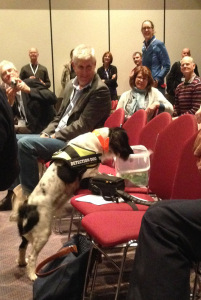
Demonstration of a weed sniffer-dog, trained to detect certain weed species, to find a weed hidden in the conference room

Chris attended the 19th Australasian Weeds Conference in Hobart from 1–4 September 2014. The conference brought together about 240 people, who work with (or in many cases against) weeds in Australia and New Zealand, and few others from further afield. It was hosted by CAWS (Council of Australasian Weed Societies).

A broad cross-section of participants were in attendance from universities, community groups and governments. Regional government staff ranged from those involved with weeds at a country and state level, to regional councils and NRM authorities. South Australia was represented by State Herbarium, The University of Adelaide, the University of South Australia, Biosecurity SA, Natural Resources South East and Adelaide and Mt Lofty Ranges, Rural Solutions SA, to name a few.

Topics and talks given included current weed research in both, the laboratory and in the field, weed policy, on-ground activities, managing weeds, as well as discussion groups debating how to best tackle weeds at a national, regional and local level. Keynote speakers included Prof. Daniel Simberloff from the University of Tennessee, Knoxville, and Prof. Stephen Hopper from The University of Western Australia. Prof. Simberloff spoke about biological invasions and how these are perceived by people at each end of the debate. Prof. Hopper informed the Conference about his observations regarding weeds that dominate areas in Australia, and compared this to how these species exist in much lower numbers in the their native countries in harmony with the environment.

Several other State Herbaria were also represented at the conference with Matt Baker from the Tasmanian Herbarium and Melinda Laidlaw from the Queensland Herbarium. Melinda coordinates the Queensland Weed Spotter’s Network and is achieving great results identifying new weed incursion throughout the State.

At the Conference, Chris gave a presentation entitled Weeds in South Australia: a Regional account and will be presenting this exciting talk and a report on the 19th Australasian Weeds Conference at the next It’s All About the Plants seminar.

New artwork created in the Herbarium

Lisa3 edit JK lo-res
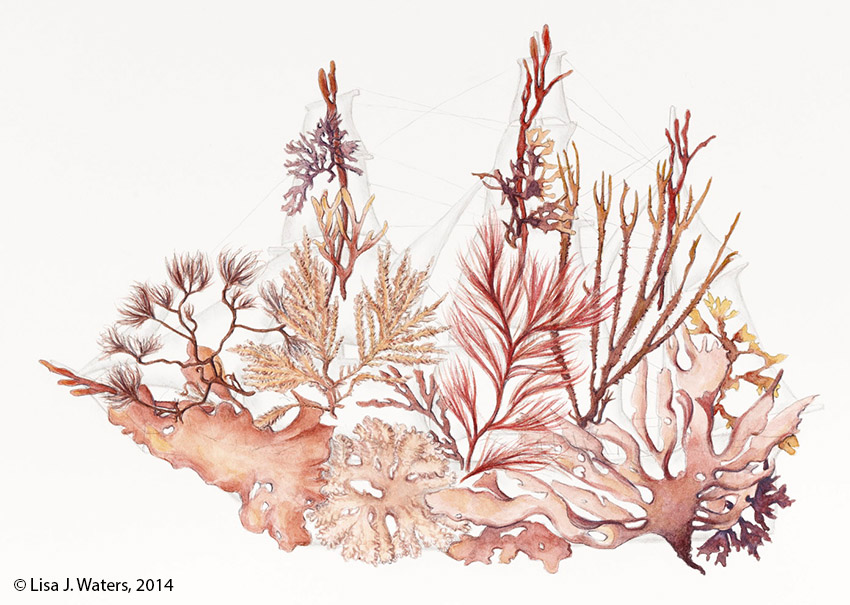
This is a first look at artwork created by Lisa Waters inspired by her research on Jessie L. Hussey.

Lisa Waters is a Technical Officer at the State Herbarium, although her background is as a visual artist and scientific illustrator. She has created artwork for various botanical publications and exhibitions.

Jessie L. Hussey lived from 1862–1899 in Port Elliot. Her passion for botany helped her to make a significant and pioneering contribution to the knowledge of South Australia’s terrestrial and marine flora during the 1890s. She became a respected collaborator of many leading national and international botanists and phycologists.

Lisa says

…through the slow simple process of letters and parcels sent by ship, Jessie collaborated on a global scale with scientists abroad. This image is of a ship made of actual algal specimens that she sent to Prof. Jacob Agardh in Lund, Sweden.

Since 2008 Lisa has been researching the life and work of Jessie L. Hussey. In 2012 she travelled to Europe on a Churchill Fellowship, to visit herbaria in Sweden, Germany, Great Britain and Ireland, where specimens collected by Jessie L. Hussey are held. The project is ongoing and she aims to publish a book about Jessie, which will be illustrated by artwork inspired by the research and Jessie’s life. Lisa has also given presentations on her research.

Please keep following this blog to see more of Lisa’s artwork in the future.

Kangaroo Island Fungi and Art

It’s All About the Plants
Tuesday, 2 September 2014, 10:00–12:00
Ground Floor Meeting & Lunch Room, Tram Barn

by Pam Catcheside
Honorary Research Associate, State Herbarium of South Australia

Pam will explore the theme of fungi and art as it pertains to the KI fungi.

Kangaroo Island’s large area of remnant vegetation houses a very rich diversity of fungi. New species of fungi have been found there as well as many new records of fungi for South Australia, together with species of rare fungi. Fungi are not only essential for life on earth, but their variety, importance, beauty and strangeness make them members of an intriguing and often elusive kingdom.

Kangaroo Island artists demonstrate an involvement, empathy and ability to show different aspects of their environment. They will be illustrating the fungal kingdom in next year’s SALA art exhibition at the National Wine Centre, organised by Fleur and Fred Peters of Fine Art KI.

All Herbarium staff, honoraries, volunteers and students are welcome.
Morning tea provided.

Award-winning photo of Crepidotus sp. by David Catcheside

New Journal article, Aug. 2014

Rhododendron dissilistellatum

Today, the Journal of the Adelaide Botanic Gardens published an article (700kb PDF) by Lyn Craven describing three new species of Rhododendron from Sulawesi and New Guinea, and new combinations for six other taxa. This is one of the last papers by this author, who submitted the final manuscript three weeks before he passed away in mid-July 2014.

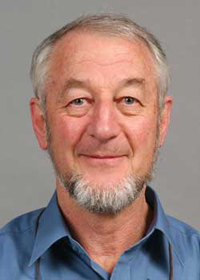
Craven_Lyn_2004Lyn Craven was for many years a research botanist at the Australian National Herbarium, Canberra (CANB), and during the last few years an Honorary Research Fellow at this institution. His research focused on several groups, including Myrtaceae (non-eucalypt genera, especially Syzygium, Eugenia and Melaleuca incl. Callistemon), Malvaceae (Gossypium, Hibiscus), Ericaceae (Rhododendron), Fabaceae (Glycine), Boraginaceae (Heliotropium) and other plants from Australia, Malesia and the Pacific. In collaboration with Brendan Lepschi, he also authored the treatment for several genera of Myrtaceae for the new edition of Flora of South Australia, which will be published later this year. More information on Lyn’s life and work will be published in a forthcoming article in the Australasian Systematic Botany Society Newsletter.

To access content of all volumes of the Journal of the Adelaide Botanic Gardens since 1976, please visit the journal’s web-site at flora.sa.gov.au/jabg.