SA NRM Science Conference 2014

SANRMSci

(see our post for info on the 2016 SA NRM Science Conference)

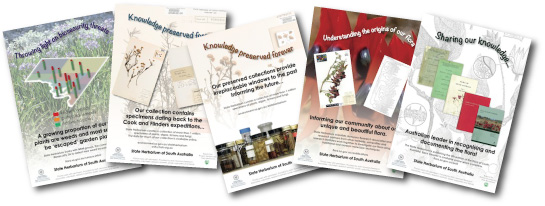
The SA Natural Resource Management Science Conference is underway at The University of Adelaide. An impressive range of people are attending the conference including regional staff from across the state, scientists, researchers, university staff and students and members of the public. Herbarium staff, volunteers and Friends are in attendance. There is an interesting assortment of herbarium posters on display in the Maths Lawn West marquee providing interesting material to peruse whilst munching on a muffin during the breaks, although most people are chatting and enjoying a catchup with their colleagues from around the state. posters
The opening plenary talks challenged our assumptions about the state of natural resources in South Australia, Prof Corey Bradshaw presented a number of lines of evidence that we have shifted our baseline expectation for what healthy ecosystems look like. Prof Chris Daniels highlighted the integrated nature of NRM region usage of science to deliver on-the-ground management activities through the NRM acting as a research provider, partner and user. Chief Botanist—Prof Michelle Waycott—presented the opening talk of the Coasts and Marine session highlighting the status of seagrasses in South Australia. Congratulations to DEWNR’s SA NRM Research & Innovation Network coordinator, Dr Jennie Fluin and her team for putting together a great program with hundreds of attendees.

New Journal article, Apr. 2014

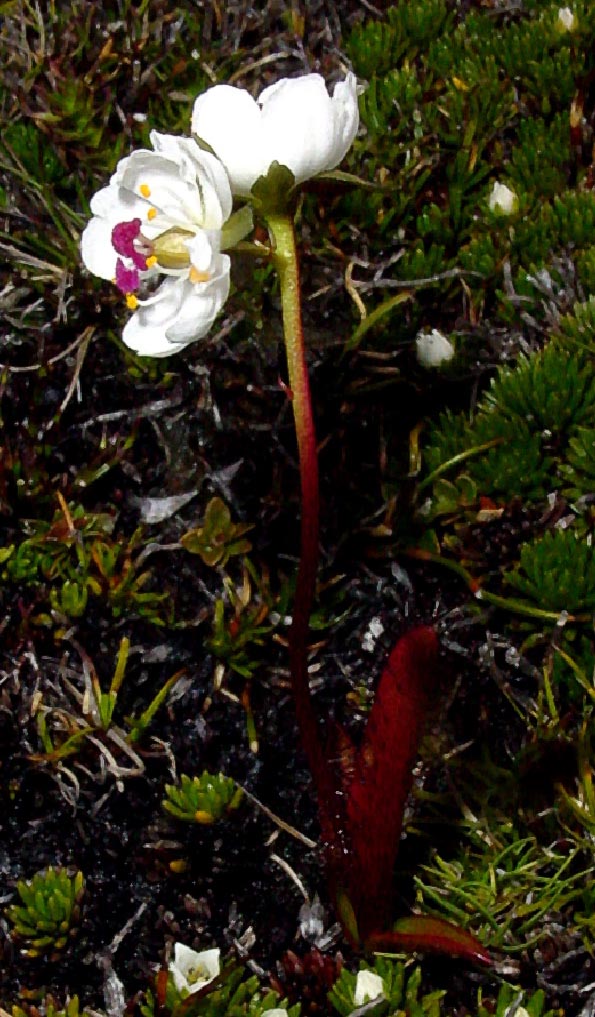
Drosera murfetii in the Hartz Mountains, Tas.

Yesterday, 1 Apr. 2014, the second paper of Vol. 27 (2014) was published in the online edition of the Journal of the Adelaide Botanic Gardens.

Drosera murfetii (Droseraceae), a new species from Tasmania, Australia (2.8MB)
by A. Lowrie & J.G. Conran
describes the “giant alpine sundew”, a new species of Drosera from southern Tasmania, related to Drosera arcturi.

To access content of all volumes of the Journal of the Adelaide Botanic Gardens since 1976, please visit the journal’s web-site at flora.sa.gov.au/jabg.


Jessie Hussey inspires school teachers

State Herbarium of South Australia, specimen AD 96920168

Pimelea husseyana was named after Jessie Hussey by Ferdinand von Mueller in 1894; it is now called Pimelea phylicoides. This specimen collected in 1897.

This week, Lisa Waters from the State Herbarium gave a presentation to a group of 50 primary school teachers about her research on the 19th century plant collector and amateur botanist Jessie Hussey. She was invited by Prof. Martin Westwell (Flinder Centre for Science Education in the 21st Century, Flinders University), who is currently Scientist in Residence at the Department for Education and Child Development (DECD), working with teachers on the science curriculum, with particular emphasis on the Science as a human endeavour strand.

Jessie Hussey lived from 1862–1899 in Port Elliot. Her passion for botany helped her to make a significant and pioneering contribution to the knowledge of South Australia’s terrestrial and marine flora during the 1890s. She became a respected collaborator of many leading national and international botanists and phycologists.

Lisa is researching the life and work of Jessie Hussey for over 5 years. In 2012 she travelled to Europe on a Churchill Fellowship, to visit herbaria in Sweden, Germany, Great Britain and Ireland, where specimens collected by Jessie Hussey are held, as well as many of the letters she wrote to overseas scientists.

Jessie’s story, and Lisa’s own story of investigating Jessie’s life and work, provided us with inspiring examples of how science can really come alive and be much more meaningful when we hear the personal stories involved. — Prof. Martin Westwell


Seagrass book published

State Herbarium of South Australia’s Chief Botanist Michelle Waycott and her co-authors Kathryn McMahon & Paul Lavery (Edith Cowan University) published their new handbook to southern temperate seagrasses last month.

A guide to southern temperate seagrasses
M. Waycott, K. McMahon & P. Lavery
CSIRO Publishing, $29.95

Title pageThe book describes the exceptionally diverse seagrasses in the temperate parts of the southern hemisphere, i.e. off the coasts of southern Australia, New Zealand, southern South America and southern Africa. It introduces readers to the evolution, biology and ecology of these plants and presents detailed information on each species, with many photographs and drawings.

This is the second book in a series of guidebooks on the seagrasses of the world. The first volume was entitled A guide to tropical seagrasses of the Indo-West Pacific, published in 2004 by James Cook University.

The current volume can be purchased via the CSIRO web-site or in well-stocked bookshops. A limited preview of several pages is also available on the web-site.