Author Archives: Jürgen

Art about Jessie L. Hussey

Here is a first look at some more artwork created by Lisa Waters. It is inspired by her research on the life and work of 19th century amateur botanist and collector Jessie L. Hussey.

Lisa says

…Jessie L. Hussey had a significant collaboration with Prof. Jacob Agardh of Lund, Sweden, who was the leading phycologist of his time. Sadly Jessie died in March 1899, only aged 36, with so many plans left unfinished, whilst Prof. J Agardh was able to live a long and productive life working on his beloved algae up until his death at age 87 in January 1901.

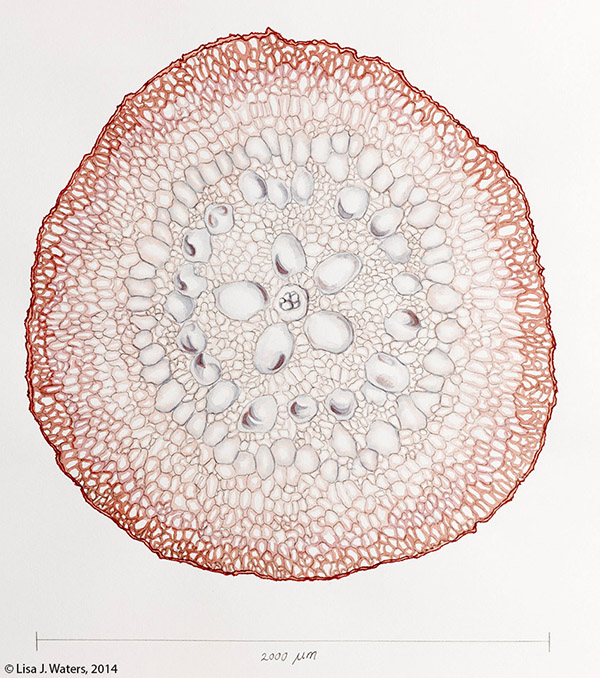
After Jessie’s death Agardh continued to work on her algae specimens and one of the last things he did was describe a new genus from her collections, which he named in her honour in a paper published after his death in 1901. The genus Husseya has one species, which he named Husseya australis. Diagnostic characters for this species include a distinctive central cell structure and that older plants grow a thick outer wall of cells which is absent in younger plants.

These two paintings are of transverse sections of Husseya australis as seen under a high powered microscope and represent the collaboration between Jessie and Agardh. The younger plant represents Jessie, who did not get to live the long productive life she had planned and therefore did not get to develop the thick outer wall of cells. The older plant represents Agardh, who lived a long productive life and was able to develop the intricate outer wall of cells.
The current name for Husseya australis is Husseya rubra. The Algae revealed fact-sheet for this species can be found here on the eFloraSA web-site.

Please click here and here to see some of Lisa’s previous artwork and more information about her project. She is continuing her work, so keep following this blog for updates.
 

New Journal articles, Oct. 2014

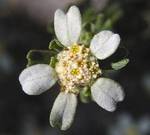
Yesterday, 29 Oct. 2014, the Journal of the Adelaide Botanic Gardens published two new articles online:

  • H.R. Toelken: Notes on Hibbertia (Dilleniaceae) 10. Hibbertia hirsuta (subgen. Hemistemma: H. vestita group) does occur in South Australia and Tasmania. (600kb PDF)
  • G. Kantvilas & J.A. Elix: Additions to the genus Lecidella (lichenised Ascomycota: Lecanoraceae). (820kb PDF)

Lecidella leucomarginata, a new lichen described by Kantvilas & Elix. Scale bar = 1 mm.

State Herbarium of South Australia Hon. Research Associate Hellmut Toelken discusses the rediscovery of Hibbertia hirsuta in south-eastern South Australia, 130 years after it was first collected in the State. For a long time the species was thought to only occur in Tasmania.

Lichenologists Gintaras Kantvilas (Tasmanian Herbarium, Hobart) and Jack Elix (Australian National University, Canberra) describe one new species and one new subspecies of the lichen genus Lecidella; their paper also includes a key to the genus for temperate Australia.

To access content of all volumes of the Journal of the Adelaide Botanic Gardens since 1976, please visit the journal’s web-site at flora.sa.gov.au/jabg.

Primary School Herbarium Project launched

Mundulla Primary School’s new microscope, plant press and books. Photo: Jenny Dungey.

At the end of September 2014, State Herbarium Weeds Botanist Chris Brodie cut the ribbon at the official launch of the Mundulla Primary School Herbarium Project. He also conducted a “weeds walk” with school children in nearby bushland. The launch was a great success and highlighted the partnership between the school and the community, the NRM Board, DEWNR and the State Herbarium of South Australia. The school received an NRM grant, which was used to purchase a high performing microscope, capable of connecting with an interactive white-board, as well as a number of reference books.

The Principal, Mr Jo Artz stated that

… as a major component of my year 3/4/5 Science class work this term (Biology: Plant Science), students have been instructed and engaged in the learning associated with collecting, identifying and writing information reports about plants they have found.
… The main purpose of a Herbarium is to allow for identification of plants, so that appropriate actions may be implemented if weeds require eradication or rare species need a helping hand to survive. Much of this work has been very professionally conducted by one of our local volunteers Dee Provis. Her knowledge and enthusiasm has rubbed off on many students and we have at least ten youngsters who want to be Biologists later in life.

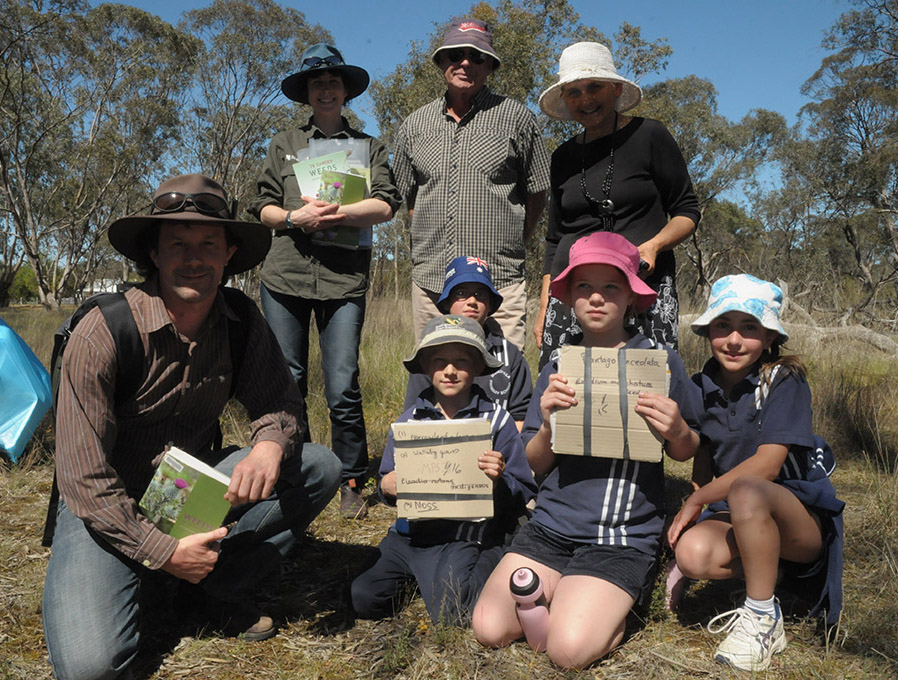
Weeds Botanist Chris Brodie, NRM Officer Becky McCann, Principal Jo Artz and volunteer Dee Provis (from left to right) with Mundulla Primary School students. Photo by Benn Gransden, Border Chronicle.

The Mundulla herbarium and the books will be stored in the local library, to assist with increasing the knowledge held within the local community of both indigenous and exotic plants. Both the school and the community will add to the herbarium over time. It is hoped that the project will serve as a model that can be transferred to other local government areas in the South-East.

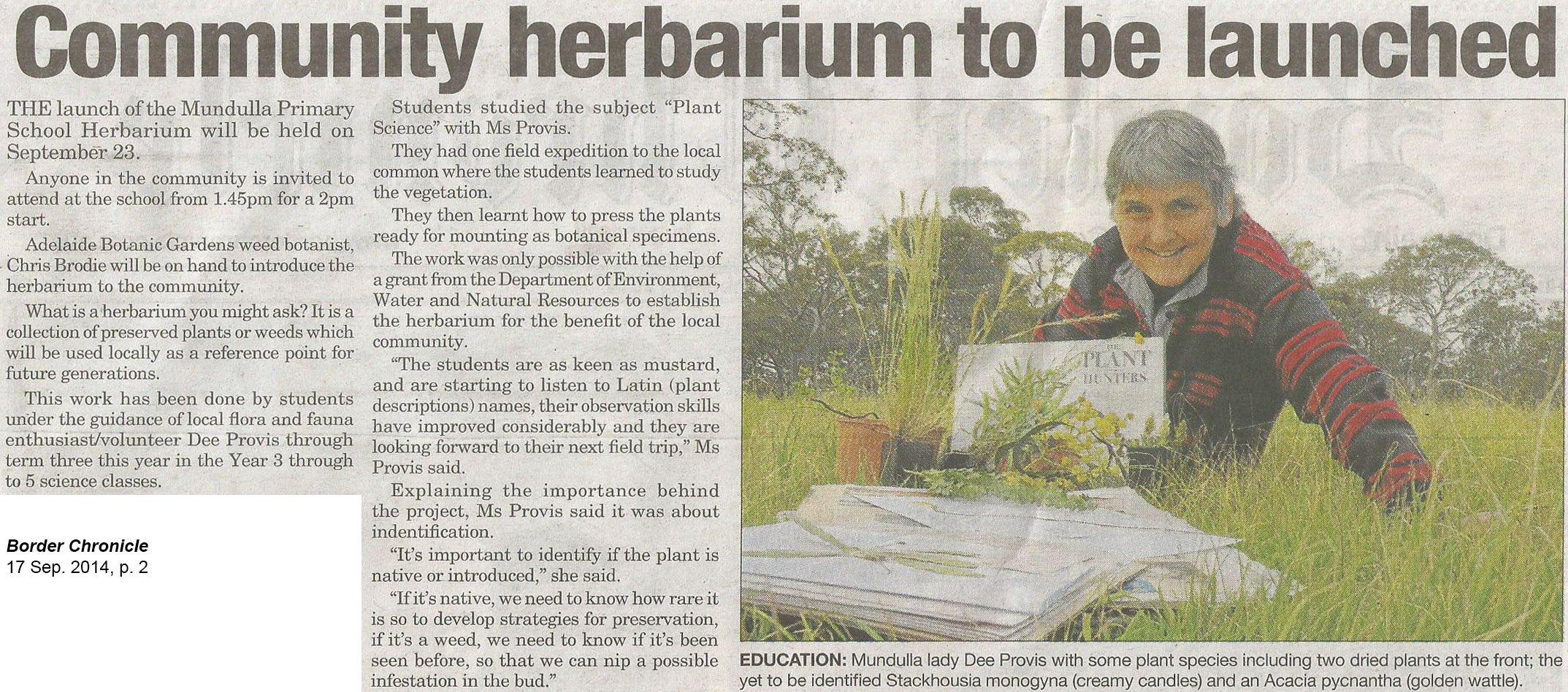
The launch has been reported in the local Border Chronicle. The paper also gave permission to reproduce the photographs in this blog article.

Border Cronicle 17.9.2014 (School Herbarium)

New environmental data portal

A new online portal providing one-stop access to environmental data and reports is now available to the public. Developed by the Department of Environment, Water and Natural Resources (DEWNR), Enviro Data SA is part of the Premier’s Open Data policy agenda. The web-site brings together information from DEWNR, the Environment Protection Authority (EPA), Primary Industries and Regions (PIRSA), the Department of State Development (DSD, formerly DMITRE), the Bureau of Meteorology (BOM), the Goyder Institute and the Murray Darling Basin Authority (MDBA).

The State Herbarium of South Australia contributed PDF documents of all articles published in the Journal of the Adelaide Botanic Gardens since Vol. 1 (1976), treatments of the new, 5th edition of Flora of South Australia (2011–), as well as scans of many out-of-print books and other publications.  Enviro Data SA provides another access point to the Herbarium’s publications, in addition to the DEWNR web-site. In the near future, the Journal of the Adelaide Botanic Gardens will also be available through JSTOR. The State Herbarium’s specimen data is available on eFloraSA, through Australia’s Virtual Herbarium (AVH) and the Atlas of Living Australia (ALA). eFloraSA also provides access to the Census of SA Plants, Algae & Fungi, as well as to several plant identification tools.

New data sets, reports and publications will continue to be added to Enviro Data SA over time, providing a single source for information on the State’s natural resources that can be used by government, primary producers, scientists and interested members of the public.

Visit data.environment.sa.gov.au for more information.