Author Archives: Jürgen

New Journal volume, Dec. 2014

Today, 1 Dec. 2014, a new special volume of the Journal of the Adelaide Botanic Gardens was published.  Volume 28 of the Journal consists of one article: P.S. Short’s magnum opus, the revision of the Australian species of Brachyscome (Asteraceae).

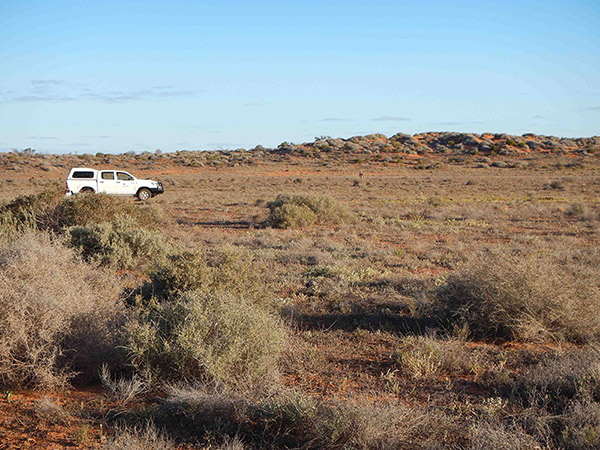
Brachyscome tatei near the SA/WA border

A taxonomic review of Brachyscome s.lat. (Asteraceae: Astereae), including descriptions of a new genus, Roebuckia, new species and new infraspecific taxa. (10mb PDF)

The 219 page article is the result of over 20 years’ of research. All Australian species of Brachyscome and related genera are reviewed. 17 new species and 4 subspecies of Brachyscome are described as new, totalling the number of species of the genus to 87. The new genus Roebuckia is split from Brachyscome. It is named after William Dampier’s ship, the Roebuck, which landed on the W.A. coast in 1699. Roebuckia contains 9 species, of which 5 species are new described, as well as 5 new varieties.

The paper is illustrated with photographs and very detailed line-drawings of fruits by botanical artist Sue Wickison from New Zealand. The articles concludes with a large appendix, listing the character states for 87 morphological and other characters for all species discussed.

To access content of all volumes of the Journal of the Adelaide Botanic Gardens since 1976, please visit the journal’s web-site at flora.sa.gov.au/jabg.

Soil seed banks and the restoration of plant biodiversity in an arid zone habitat

It’s All About the Plants
Tuesday, 25 November 2014, 10:00–12:00
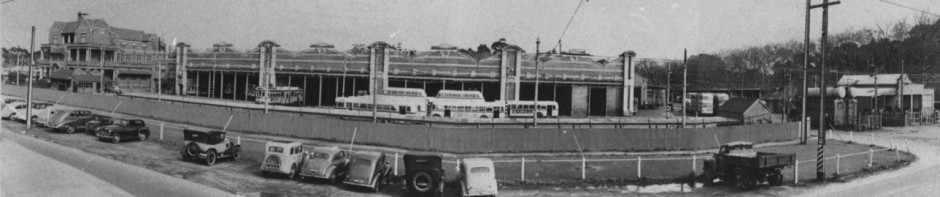
Ground Floor Meeting & Lunch Room, Tram Barn

by Molly Whalen, Rick Davies & Alison Nicolson
Flinders University School of Biological Sciences

Witchelina M.Whalen talk 600x450Predicting the response of native vegetation in Australia’s arid rangelands to management actions, such as changing grazing regimes, is often hampered by a lack of knowledge regarding the nature of native plant biodiversity at a local scale. Simply measuring above-ground plant species richness can be quite misleading because in arid habitats, much of a site’s plant diversity, particularly that of short-lived species, may be present as dormant seeds in the soil seed bank. We are investigating factors influencing variation in both above- and below-ground plant diversity in a large (ca. 420,000 km2) conservation reserve in arid South Australia. This reserve, Witchelina, has a long history (ca. 140 years) of pastoral use, but was destocked in 2010 when it was purchased by the Nature Foundation of South Australia. Particular factors being investigated include variation among different habitats and effects of past grazing intensities. For example, we are comparing the diversity and composition of the seed banks and above-ground vegetation in areas close to watering points with a history of heavy grazing with those of areas more distant from watering points that have been less heavily grazed. Alison Nicolson will also speak about her honours research on Witchelina, for which she used existing DEWNR photopoints monitoring sites at Witchelina to study regeneration since 1999. By comparing, photopoint photos taken in 2014 with field measurements, she has also been able to evaluate the reliability of using photopoints alone as a monitoring tool.

All Herbarium staff, honoraries, volunteers, students and guests welcome.
Morning tea provided.

New Flora chapter published, Nov. 2014

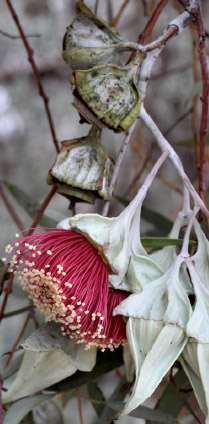
Eucalyptus alatissima

Today, 17 Nov. 2014, the first part of the chapter of Myrtaceae (32.9mb) for the 5th edition of Flora of South Australia was published. On 102 pages, the author Dean Nicolle describes all native and naturalised taxa of Eucalyptus, Corymbia and Angophora, occurring in South Australia. Identification keys are provided and most species are illustrated with drawings and photographs. Other genera of Myrtaceae are in preparation and will be published shortly.

With over 100 species this is one of the largest and most complex chapters published to date, editing of which took over two years and included extensive work on plant distributions and synonyms, to bring the Flora chapter and the SA Plant Census in synch. Many thanks to Robyn Barker and Peter Lang for their help during this time.

The general link to the 5th edition of Flora of South Australia is flora.sa.gov.au, providing current treatments, glossary, introduction and cover pages for printing. Previous versions of Flora treatments are still available from our Superseded treatments page.

Mundulla Primary School Herbarium Project

It’s All About the Plants
Monday, 15 December 2014, 2:00–3:00
Ground Floor Meeting & Lunch Room, Tram Barn

Note changed date and time!

by Dee Provis

Dee Provis, a local naturalist and community volunteer from Mundulla, in the upper South East, has kindly offered to come and tell us about the Mundulla Primary School Herbarium Project she set up. The project involved the State Herbarium’s Weeds Botanist Chris Brodie, who also attended the launch of the project. This is a great example of how different levels of government and the community can partner to achieve positive outcomes for education and the local environment.

The aims of the Herbarium Project are

…To involve students in basic plant science, using both indigenous and exotic plants from our rare Grey Box Grassy Woodland.

To teach students how to:

  • Identify both native plants and exotic species (weeds/garden escapees)
  • Collect, mount, arrange and catalogue plant samples according to the strict protocols required by the State Herbarium
  • Make this information available to the wider community by publications, DVD & website

To increase the body of knowledge held within the local community of both indigenous and exotic plants. This resource will support locals in identifying weeds for removal and facilitate native plant retention and regeneration.

The Herbarium Project has been funded by a Natural Resources Management Action Grant in 2014.

State Herbarium Weeds Botanist Chris Brodie with Mudalla Primary School students during the launch of the Herbarium Project. Photo by Benn Gransden, Border Chronicle.

All Herbarium staff, honoraries, volunteers, students and guests welcome.
Morning tea provided