New journal articles, Oct 2013

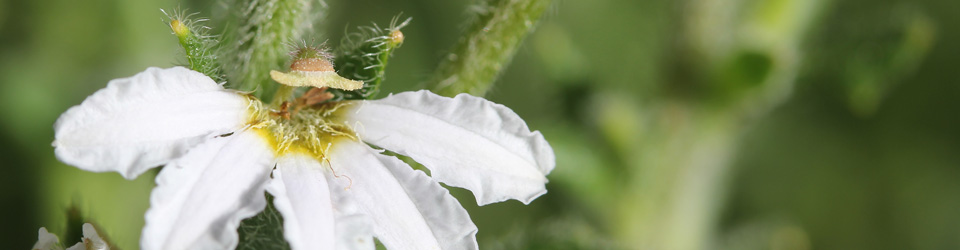
Euphrasia amplidens

Euphrasia amplidens

Today, 24 Oct. 2013, the Journal of the Adelaide Botanic Gardens published two scientific papers online.

Euphrasia amplidens (Orobanchaceae), a new and very localised species from western Tasmania (1.35MB)
by W.R. Barker, M. Wapstra & B. French

Notes on Hibbertia subg. Hemistemma (Dilleniaceae) 9. The eastern Australian H. vestita group, including H. pedunculata and H. serpyllifolia (1.69MB)
by H.R. Toelken

19 new species and subspecies from Queensland, New South Wales, Victoria and Tasmania are published in these articles.

To access content of all volumes of the Journal of the Adelaide Botanic Gardens since 1976, please visit the journal web-site at flora.sa.gov.au/jabg.

Fossilized leaf waxes reveal the effects of ancient global warming on plants

It’s All About the Plants
Tuesday, 1 October 2013—10:00–12:00
Goodman Building Lecture Theatre

by
Dr Cesca (Francesca) McInerney, ARC Future Fellow
School of Earth & Environmental Sciences, University of Adelaide

Iaapl

Dr. McInerney’s research focuses on reading isotopic signatures from the rock record to understand the influence of past climate changes on ancient ecosystems.  In particular, she is interested in how plant communities and terrestrial biogeochemical cycles reacted to periods of global warming in the geologic past as a potential analogue to future climate change impacts.

Specifically, she analyzes the stable isotopic composition of fossilized leaf waxes to reconstruct past climates and ecosystems.  These leaf waxes are essentially molecular fossils that retain information for millions of years about the plants that made them and the environments they lived in.  In order to interpret these ancient chemical signatures, McInerney also studies modern plants and soils as a means of calibrating the isotopic tools she applies to the geologic record.

All Herbarium staff, honoraries, volunteers and students are welcome.

Morning tea provided

Jessie Hussey

It’s All About the Plants
Tuesday, 6 August 2013—10:00–12:00
Goodman Building Lecture Theatre

by Lisa Waters
State Herbarium of South Australia

Lisa will be presenting a talk on her research into the life and work of Jessie Hussey (1862–1899), a woman whose passion for botany helped her to make a significant contribution to the knowledge of South Australia’s terrestrial and marine plants.

All Herbarium staff, honoraries, volunteers and students are welcome.

New publications June 2013

Caloplaca_Kantvilas & Kondratyuk_Fig2 small

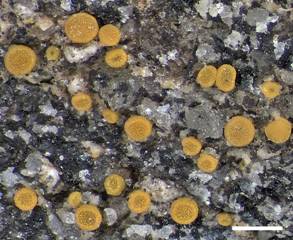
Caloplaca piscatorica

On 27 June 2013, the online edition of the Journal of the Adelaide Botanic Gardens published two new taxonomic papers, describing new species of lichens for Australia:

  • G. Kantvilas & S.Y. Kondratyuk: New species of Caloplaca (lichenised Ascomycota: Teloschistaceae) from Kangaroo Island.  PDF (1 MB).
  • P.M. McCarthy & G. Kantvilas: Two new species of Sarcogyne (lichenised Ascomycota: Acarosporaceae) from central and southern Australia. PDF (808 KB).

Please visit flora.sa.gov.au/jabg to access all available issues of the Journal.

Flora logo GRMDFour updated treatments of plant families of the 5th edition of Flora of South Australia were released on 20 June 2013:

  • D.A. Cooke: Centrolepidaceae (version 2). PDF (1.28 MB).
  • J.P. Jessop & J.G. Conran: Commelinaceae (version 2). PDF (677 KB).
  • N.G. Walsh & J. Kellermann: Papaveraceae (version 2). PDF (645 KB).
  • C.J. Brodie: Passifloraceae (version 2). PDF (1.19 MB).

These Flora chapters feature updated text, and new photographs and illustrations.  Previous version of these chapters are still available on our Superseded Flora treatments page.  All available chapters of the new Flora, as well as the Introduction, Glossary and Key to plant families, can be accessed on flora.sa.gov.au/ed5.

DNA in botanical research

It’s All About the Plants
Tuesday, 2 July 2013 — 10:00–12:00

Dr Hugh Cross, the Herbarium’s Molecular Botanist, will be giving us some insights into how he has used DNA to take botanical research to a whole new level.

Hugh Cross, It's All About the Plants

All Herbarium staff, honoraries, volunteers and students welcome.
Morning tea will be provided.