Author Archives: Jürgen

Kangaroo Island fungi in art

As part of this year’s SALA South Australia’s Living Artists Festival, the National Wine Centre of Australia will host an exhibition featuring art inspired by the fungi of Kangaroo Island.

“Fairy Castle” by Cath Cantlon

How do we Love Thee? Let us count the ways… KI Fungi

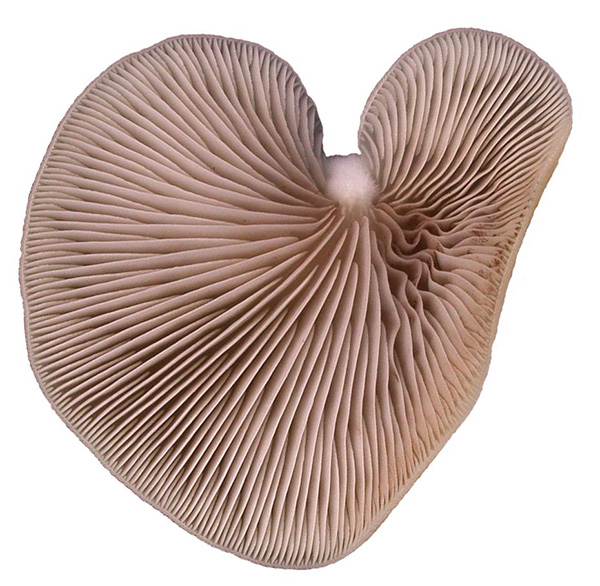
Crepidotus sp. Photo by David Catcheside

Fine Art Kangaroo Island presents exciting new works by exceptionally talented celebrated and emerging artists. Thoughtful selections combine fascinating art, pristine natural environment and creative community. Remarkable for large areas of remnant vegetation the island hosts a diversity of unique ecosystems. Interconnected by an extraordinary sense of place 22 artists reveal the obscure delights of fungi — essential for life — often furtive and mostly inconspicuous.
A wide variety of media are exhibited, ranging from jewelry and sculpture, to prints, painting and photographs.

“Mycelium magic” by Fred Peters

State Herbarium Hon. Research Associate and fungi expert Pam Catcheside was heavily involved in the preparation of the exhibition and advising artists and the gallery about mushrooms and toadstools of Kangaroo Island. She will also give a talk at the National Wine Centre on 11 August 2015 at 11 am.

The exhibition is open every day in August, 10am–5pm.

Flowering bamboo

State Herbarium Hon. Research Associates Hellmut Toelken and John Jessop have yesterday examined flowering branches of Phyllostachys aurea Rivière & C.Rivière (fishpole bamboo) from Dr Toelken’s garden. This bamboo species only sets flowers every 15–20 years. As the State Herbarium does not have flowering material of the species preserved in its collection, herbarium specimens were prepared from these branches.

bamboo_13 JK 800x776

Phyllostachys aurea, inflorescence.

The long interval between flowering in bamboos has perplexed many botanists over time. If you want to know more about this, the US Forest Service gives an overview for P. aurea, and Janzen (1976) provides a comprehensive review for all bamboo species. According to this article, the longest recorded intervals between flowering are for Bambusa vulgaris (150+ years), Chimonobambusa quadrangularis (100+ years) and P. bambusoides (120–130 years). Many bamboo species seem to die after flowering, but reports for P. aurea are not conclusive, some authors claim that plants die, others state that they die down to the rootstock but can resprout.

Phyllostachys aurea is native to China and has been introduced to many countries around the world. It is mainly used as an ornamental plant. The species has been listed as a weed in many countries, due to its invasive nature. In Australia, it is a declared weed in Queensland and New South Wales; it is prohibited in the Australian Capital Territory. It is recorded in the South Australian Census of Plants, Algae and Fungi as possibly established in the Southern Lofty (SL) region. It is not listed to occur in the other States and Territories, but parts of Victoria also treat it as a weed (e.g. the Alpine Shire).

bamboo_12 JK 1000x566

Phyllostachys aurea, inflorescences, shoots and leaves.

When it flowers, then usually all plants from the same clone come into flower, and as many horticultural plants are derived from the same parent clump, it can be expected that many Phyllostachys aurea plants in South Australia or even other parts of Australia will be flowering at the moment (or any time soon). If you have bamboo planted in your garden, then have a look…

New Flora chapter published, June 2015

Pultenaea penna, described in 2003. Photo: T.J. Horn.

The new, 5th edition of Flora of South Australia is published online in PDF-form. Today, 30 June 2015, the State Herbarium of South Australia released a revised version of the chapter on the plant family Fabaceae (peas). In addition to the existing treatments of the tribes Bossiaeeae & Brongniartieae (by I.R. Thompson) and Indigofereae (by P.G. Wilson), this chapter now also includes the tribe Mirbelieae. With 13 genera and species, this is the largest group of native peas. It was mainly written by Andrew Craigie, Peter Lang co-authored the genus Pultenaea and up-dated Dillwynia together with Jürgen Kellermann.

Flora of South Australia (5th edn): Fabaceae (Leguminosae) (partly) (version 2) (33.5MB)

The general link to the 5th edition of Flora of South Australia is flora.sa.gov.au, providing current treatments, glossary, introduction and cover pages for printing. Previous versions of Flora treatments are still available from our Superseded treatments page.

New Journal article: June 2015

Kantvilas & Wedin Arthonia insularis

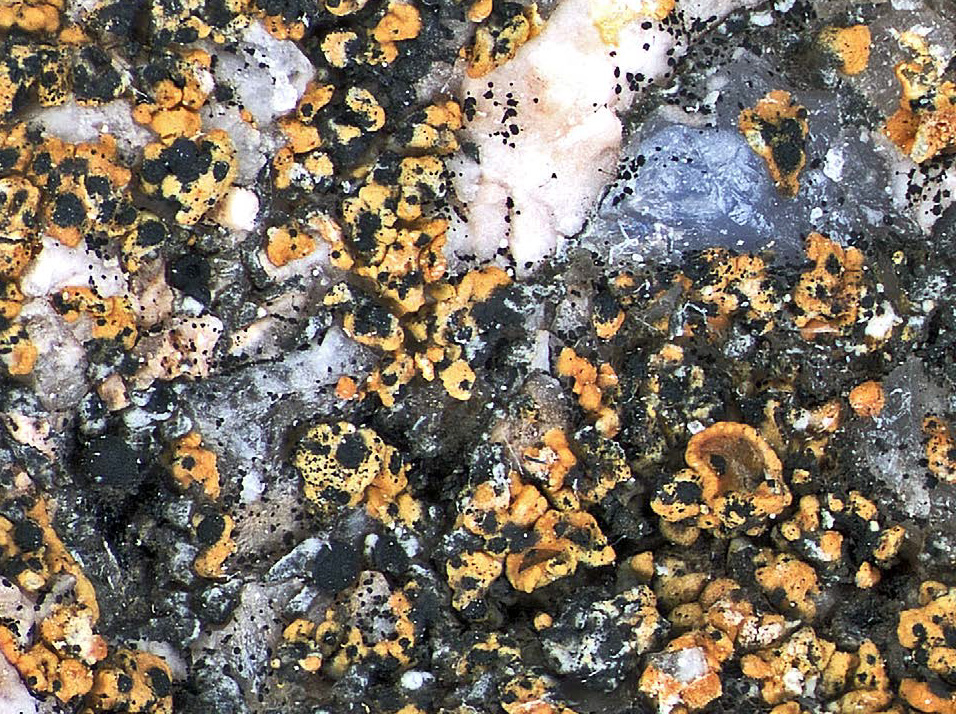
Parasitic fungus Arthonia insularis (black spots) growing on a yellow lichen. Photo: G. Kantvilas.

The first article of Vol. 29 of the Journal of the Adelaide Botanic Gardens was published online today.  Gintaras Kantvilas, Tasmanian Herbarium, and Mats Wedin, Swedish Museum of Natural History, describe two species of fungi, which grow parasitic on lichens in Kangaroo Island.

G. Kantvilas & M. Wedin
Lichenicolous species of the Ascomycete genus Arthonia Ach. from Kangaroo Island
(1MB PDF)

To access content of all volumes of the Journal of the Adelaide Botanic Gardens since Vol. 1 (1976), please visit the journal’s web-site at flora.sa.gov.au/jabg (the Journal is also available through JSTOR).

The Herbarium at the Museum

Science & Art: 12 years of the Waterhouse Prize is currently on display at the South Australian Museum. The Waterhouse Natural Science Art Prize was launched in 2002. The exhibition features the overall winning works from the last 12 years, paired with material from the collections of the South Australian Museum, National Archives of Australia, the State Herbarium of South Australia and State Records of South Australia. The exhibition is on display until Sunday 19 July. The Museum is open 7 days, 10am – 5pm. Entry to the Museum and the exhibition is free.

Several specimens from the State Herbarium are on display along with the artwork to illustrate and explain the connection between science and art. Two examples are featured below.

Waterhouse 1 (small)

Anatye by Margaret Loy Pula. Photo by Tim Gilchrist (SAM).

Above is Margaret Loy Pula’s artwork Anatye (Bush Potato), overall winner of the 2013 Waterhouse Prize, with a specimen of bush potato (Ipomoea costata) from the State Herbarium.

Nikki Main’s work Flood Stones (below) was the overall winner of the 2010 Waterhouse Prize and references flood as an important phase in the hydrologic cycle. It is paired with examples of ephemeral plants from the collection of the State Herbarium: Pink tongues (Rostellularia adscendens var. pogonanthera), curly flat-sedge (Cyperus rigidellus), downy cress (Phlegmatospermum cochlearinum), button grass (Dactyloctenium radulans), cup velleia (Velleia connata).

Waterhouse 2 (small)

Flood stones by Nikki Main. Photo by Tim Gilchrist (SAM).