Fungi expert honoured

Pam Catcheside and SA Governor Hieu Van Le (Photo: P. Canty)

State Herbarium Hon. Research Associate Pam Catcheside has recently been invited to Government House to celebrate her inclusion in the 2015 South Australian Women’s Honour Roll. This recognises her outstanding contribution in the field of mycology, ranging from the collection and observation of fungi in the field to the detailed examination & description of specimens and the publication of her results; the honour also recognises the fact that she is South Australia’s only official mycologist, filling a void in a significant area of South Australia’s biodiversity knowledge, as well as her dedication to volunteers and to making the information accessible to the community (see here for the official citation).

Congratulations Pam!

The South Australian Women’s Honour Roll pays tribute to SA women who have made an outstanding contribution to our community. The 2015 Honour Roll was launched by the Hon Gail Gago MLC, Minister for the Status of Women. This year, 30 women were included in the Honour Roll.

ASBS Conference 2015

ASBS Conference booklet cover 2015Chief Botanist Michelle Waycott, State Herbarium staff members Ed Biffin, Juergen Kellermann & Ainsley Calladine, and Herbarium Honorary Research Associates Robyn & Bill Barker attended the Annual Conference of the Australasian Systematic Botany Society (ASBS) in Canberra last week (30 Nov.-2 Dec. 2015).

Presentations were given by Ed (on molecular systematics and species identification in seagrasses), Robyn (on problems with old type specimens) and Michelle (on the South Australian eFlora platform). In addition, Michelle presented the current status of the national work towards the development of a decadal plan for systematics research in Australasia (ASBS Newsl. article, 3.3MB PDF). Bill Barker completed his tenure as President of ASBS, his work for the Society was greatly appreciated. The conference had strong themes in digitisation, data sharing and initiatives to facilitate working across Australia and New Zealand including the development of a new electronic Flora application by the Atlas of Living Australia (ALA).

PhyloLink, a new application in ALA was launched during the conference and delegates were able to attend a PhyloLink workshop following the conference (Juergen attended that workshop). Scott Edwards from Harvard University‘s Museum of Comparative Zoology presented a workshop on phylogenomic analyses, which was attended by Michelle and Ed.

The program booklet, including abstracts of all talks, can be downloaded here (460KB PDF).

Plant of the month: Nov. 2015

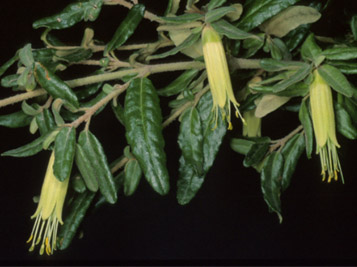
2015.11 Correa glabra var. leucoclada, Morialta C.P., photo by P.J. Lang

Correa glabra var. leucoclada, photo by P.J. Lang

We kick off our new series Plant of the Month with Correa glabra var. leucoclada (rock correa), which is a plant characteristic of Morialta Conservation Park, DEWNR’s Park of the Month for Nov. 2015.

Rock correa is found in the southern Mt. Lofty Ranges and eastern and central New South Wales. In South Australia it is confined to sheltered rocky habitats and steep gorges, mainly at Morialta, Torrens Gorge and Sturt Gorge. (Because of its restricted distribution it is listed as “rare” in S.A.) Morialta C.P. probably conserves the largest of these populations and you are bound to encounter it there, especially if you are on the walking trails near the waterfalls. With its yellowish-green tubular flowers the variety is adapted for pollination by honeyeaters: their long bills they are able to reach the nectar at the base of the flower.

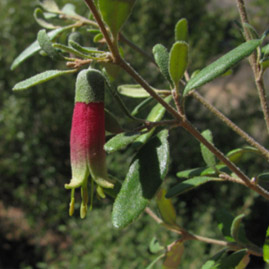
2015.11 Correa glabra var. turnbullii, Monarto, photo by L.Jansen

Correa glabra var. turnbullii, photo by L. Jansen

Correa glabra var. leucoclada is related to the more common and widely distributed C. glabra var. turnbullii (narrow-bell correa), which is found on rocky hills and plains in dryer habitat. Rock correa is distinguished from var. turnbullii by its yellow-green rather than red flowers, and the underside of the leaves and stems with more obvious scurfy hairs (giving a pale almost whitish appearance) rather than appearing smooth.

Like the rock correa, other genera of Australian plants such as Eremophila (Emu-bushes) and Prostanthera (Native Mint-bushes) have evolved species with tubular flowers adapted for bird-pollination, and furthermore these also have some taxa with red flowers and others with greenish flowers. (In contrast the insect-pollinated species of these genera have more open flowers that are usually white or violet in colour.)


New weed for SA

The State Herbarium of South Australia has added a new naturalised plant record to Census of South Australian Plants, Algae & Fungi. Cleretum bellidiforme (Burm.f.) G.D.Rowley is a South African low-growing annual succulent with daisy-like flowers blooming in shades of pink, purple, cream, orange and yellow.
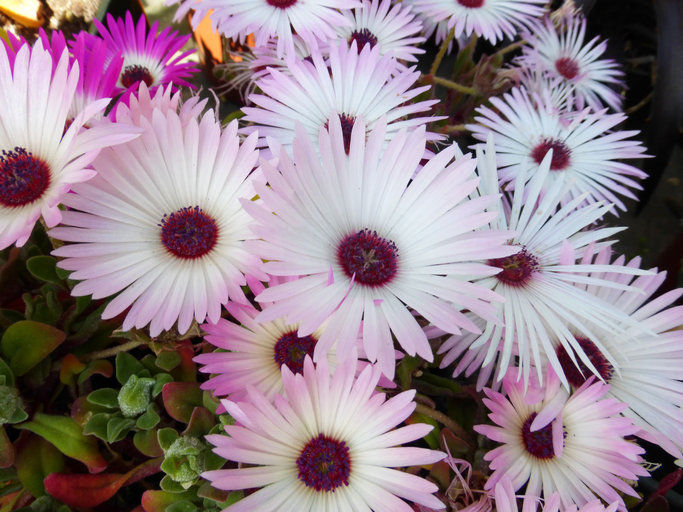
Cleretum bellidiforme EOL CC-BY-NC Zoya Akulova

Cleretum bellidiforme, photo by Zoya Akulova (eol.org)

Cleretum bellidiforme (Livingstone daisy) was first collected in Sep. 2015 from a wild plant population found growing south of Adelaide on the outer edges of Kuitpo pine plantation in sandy soil. It was formally identified by the State Herbarium Honorary Research Associate and succulent plant specialist, Bob Chinnock. The only other known location of wild growing plants is in Western Australia, on the south coast, just east of Albany.

The name “bellidiforme” means that it is similar to the common white daisy genus Bellis. However, this new plant is not in the daisy family, but a member of Aizoaceae, a botanical plant family containing predominantly drought tolerant species occupying arid and semi-arid areas of Southern Africa, with some native species found in Australia. Cleretum bellidiforme is grown by gardeners as it provides a mass of flower colour with little or no watering. It is likely that it accidently spread from gardens.

The State Herbarium’s weed botanist Chris Brodie suspects further populations of C. bellidiforme could colonise other areas and become weedy. A widespread weed in the same family is Mesembryanthemum crystallinum L. (ice plant), which is proliferating in semi-arid and coastal areas.

Weeds are spread naturally by wind and water and accidently by humans and animals. Future accidental long distance dispersal of C. bellidiforme will occur most likely as seeds in soil, attached to boots, vehicles or machinery. Shorter distance dispersal is most likely by native animals, wind or water.

If you are familiar with the wild plants of your area and notice a previously unknown plant then weed botanist Chris Brodie would like to hear from you. These mystery plants can be previously unnoticed native plants or, in some cases, new invasive weeds.

Kuitpo forest banner walkingsa.org.au (most likely from DEWNR) (small)
Kuitpo forest

Forensic scientist’s workshop

Cannabis sativa, male specimen

The State Herbarium of South Australia recently took its expertise in plant classification and identification to a whole new level. The State Herbarium, as the State’s legal authority and ‘point of truth’ for the ultimate identification of plant species was engaged by the Chemistry Unit in Forensic Science SA to provide their staff with a custom-designed two-day course on the botanical identification of Marijuana, Cannabis sativa.

The expectation from the Forensic Science team was to come away from the course with the skills and knowledge that would establish their credibility as experts in the identification of Cannabis when dealing with police evidence and when subsequently justifying their results in court.

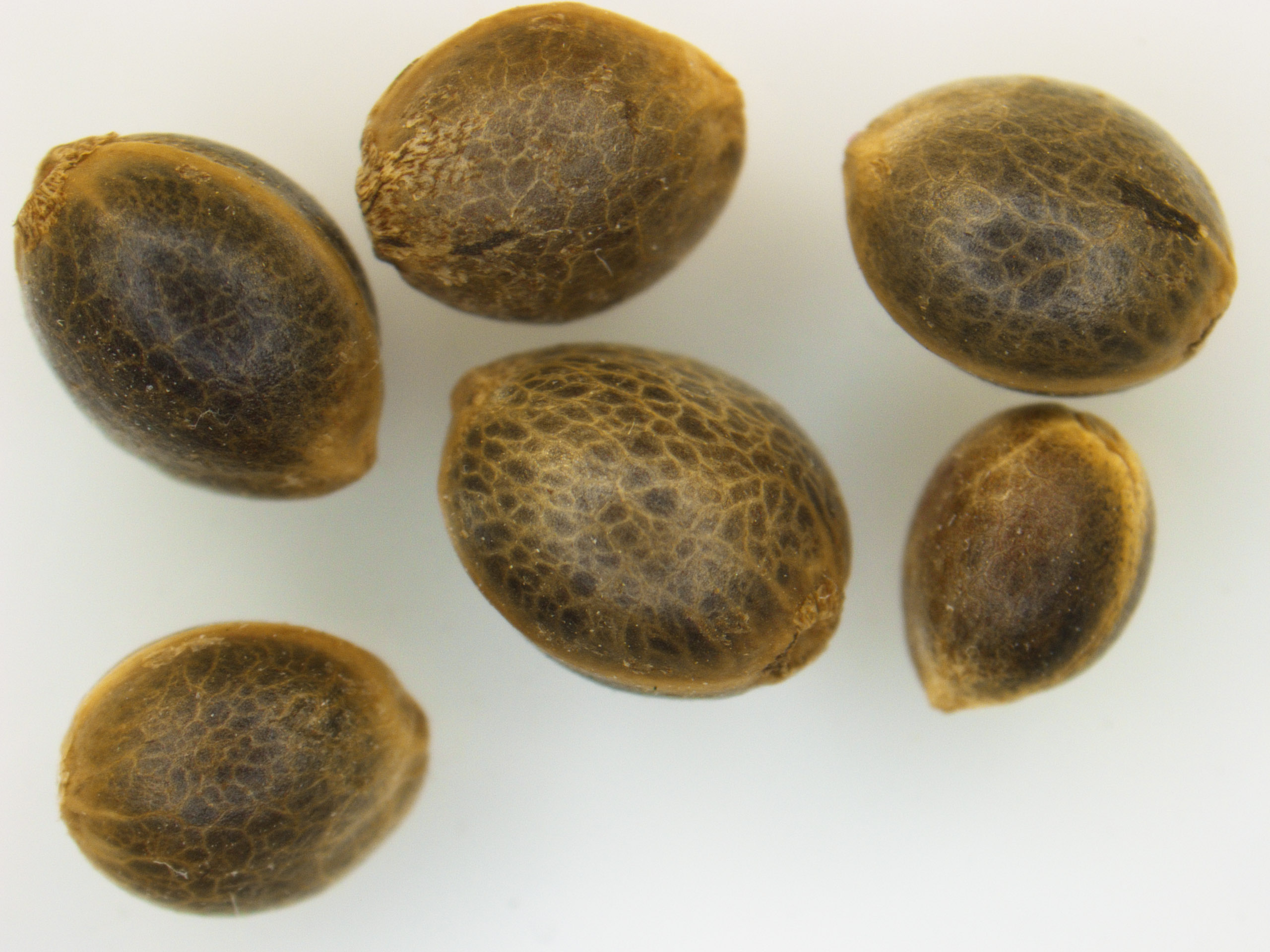
The Herbarium used its high resolution camera to take a series of photos of these specimens to show the whole plant as well as close ups of diagnostic features such as hairs and leaves, floral structures and seeds. These were included in a comprehensive course manual that would also later serve as an identification guide for the forensic scientists.

Cannabis sativa, seeds

A range of decoy plant material was included in the course. The species selected came from police and forensic cases where other plants had been confused with or mixed with for Cannabis. The Adelaide Botanic Gardens kindly provided access to fresh samples of some of these plants, which were used as part of the training.

The course was a great success with the forensic team keen to work even more closely with the State Herbarium in the future.