Category Archives: News

Conferences in Adelaide

(1) This week, the Botanic Gardens of South Australia, hosted the 8th BGANZ Congress. Around 140 delegates from Australia, New Zealand and around the world attended the conference. The theme of the Congress was Preservation: Exploring and Adapting, underlining the need for adaptation of botanic gardens in their ongoing environment and the ever changing attitudes of the community. This covered both the natural, cultivated and political environment and the required strategies to ensure the preservation of endangered species can continue.

The BGANZ Congress Booklet is available for download (64mb PDF).

(2) At the end of next month, 26-29 Nov. 2017, the State Herbarium of South Australia, the South Australian Museum, The University of Adelaide and Flinders University will host the joint meeting of the Australasian Systematic Botany Society (ASBS) and the Society of Australian Systematic Biologists (SASB), including the biennial Invertebrate Biodiversity and Conservation Meeting. The conference with the theme Systematics 2017 — Integrating Systematics for Conservation and Ecology will be held at The University of Adelaide.

Plenary speakers will include Gonzalo Giribet (Harvard University), Judy West (Parks Australia), Nerida Wilson (Western Australian Museum), Shelley James (National Herbarium of New South Wales) and Kristofer Helgen (The University of Adelaide). Over 120 delegates have already registered, many of whom will give presentations on their research.

Please visit the Conference web-site for more information and registration.

The University of Adelaide, Barr Smith Library in the foreground. Photo: M. Seyfang (CC-BY).

Bushblitz 2017 (1)

Great Victoria Desert dunes from the air, covered in rings of spinifex grass. Photo: P.J. Lang.

From 16 Sep. – 1 Oct. 2017, three botanists from the State Herbarium of South Australia, Peter Canty, Peter Lang and Juergen Kellermann, and a colleague from the Western Australian Herbarium, Ryonen Butcher, took part in the Bushblitz expedition to the Great Victoria Desert.

They returned with about 600 plant collections from the region for the State Herbarium. A duplicate set of specimens will be lodged with the WA Herbarium. The collections have been dried and are currently being examined and identified. Work in this environment was greatly facilitated by the use of a helicopter to access remote locations.

The Great Victoria Desert bioregion (GVD) is shared between South Australia and Western Australia. It is one of the least explored areas of both states. Two previous reports by the Biological Survey of South Australia cover the area, i.e. the reports for the Anangu Pitjantjatjara Lands (34.3mb PDF) and the Maralinga Tjuratja Lands (20.4mb PDF). However many other areas in the regions remain unexplored. Detailled reports on two GVD areas in WA have been prepared: Queen Victoria Springs Nature Reserve (MSc thesis) and the Peterswald Hill area (12.7mb PDF). The Bushblitz study area covered the Maralinga Tjaruta Lands and Mamungari Conservation Park, including the Serpentine Lakes.

The expedition could not have been undertaken with the help and support of the traditional owners of the area, the Maralinga Tjarutja Council, senior people from Oak Valley and Tjuntjunjara, as well as the Spinifex Rangers and the Alinytjara Wilurara NRM. This is greatly acknowleged.

Bush Blitz is an innovative partnership between the Australian Government, BHP Billiton Sustainable Communities and Earthwatch Australia. It is the world’s first continent-scale biodiversity survey, providing the knowledge needed to help us protect Australia’s unique animals and plants for generations to come.

Seaweek 2017

To celebrate Seaweek (4-10 Sep. 2017), State Herbarium Hon. Research Associate Bob Baldock wrote the following article for this blog…

Looking towards the west – seaweeds tell the tale of South Australia’s marine connections

The State Herbarium houses about 90,000 specimens of seaweeds (algae), collected over some 160 years. Why so many? and why for so long?

Hypoglossum harveyanum, a rare red alga looking as if it is on fire, and even more striking under the microscope (right image). Photo: R.N. Baldock.

Well, southern Australia has more marine species belonging (that is, endemic) to our region than any other place in the world. Surprisingly, this includes the Great Barrier Reef (GBR), which, although it has more species, shares many of them with other regions. Some think we should call our region the GSR – The Great Southern Reef – just to highlight this (Bennett et al. 2015). We have some species that have only been collected a few times (such as Hypoglossum harveyanum, above). Will we ever find them again?
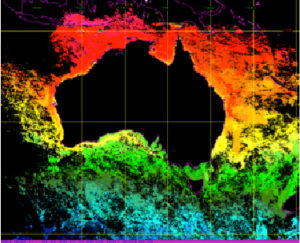
Satellite image of surface sea temperature. Source: www.cmar.csiro.au

And we also need to know if numbers, types and distributions of species are changing over time, hence the need to collect, preserve and catalogue specimens. How else will we know if climate change is affecting our coastal marine plants and animals? The vast amount of information in the Herbarium’s collections is available to answer some of these questions (Wernberg et al. 2011).

Where does southern Australian marine diversity come from?

Our continental neighbours, Africa and South America, dip further south than Australia They have a south to north distribution of marine species, related to ocean currents. But in Australia, we have a west to east warm current, the Leeuwin, that sweeps across the south of our continent. This current has peculiar swirling characteristics, seen from space that trap subtropical species and carry them as far as the SE of South Australia (Wernberg et al. 2013).

A mix of the cool water red alga Griffithsia teges and several species of green Caulerpa, a genus usually found in tropical regions, growing at Robe. Photo: R.N. Baldock.

Add to that both cold water lying in southernmost parts of southern Australia, which encourages the growth of giant brown algae, and localised upwelling of cold, nutrient rich, deep waters, due to prevailing SE winds in summer, and you have a recipe for large diversity. Odd mixtures of cool- and warm-water species can live together.

South Australian gulfs also harbour relicts from ancient sub-tropical times. One is the brown alga Cystoseira trinodis.

Occasionally drifting algae move great distances from their source. One spectacular example is the brown alga Turbinaria.
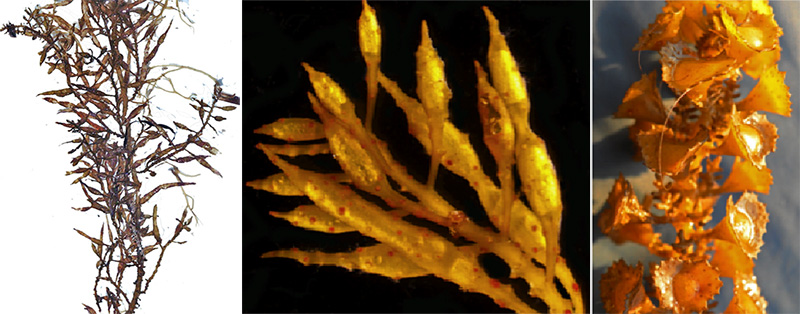
The relict brown alga Cystoseira trinodis (LEFT & MIDDLE) and a close-up of Turbinaria (RIGHT), washed into the Great Australian Bight from the Indian Ocean. Photos: R.N. Baldock.

Unfortunately, unwanted algae (“weeds”) such as Caulerpa cylindracea (Algae Revealed fact sheet under the name Caulerpa racemosa var. cylindracea; 365kb PDF) can also drift from the west, too.  Recognising them from closely related species and tracing their spread along our coasts is essential for environmental management.
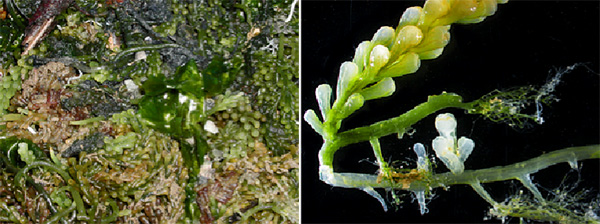
Caulerpa cylindracea. (LEFT) A mass of plants exposed at low tide. (RIGHT) Detail of the runner by which it spreads, and club-shaped upright parts. Photos: R.N. Blaldock.

Herbaria with their data,  validated by specimens, are storehouses of information and can assist in this.

If you want to know more about the southern marine algae, have a look at Bob Baldock’s illustrated Algae Revealed fact sheets. They can be accessed by clicking the MORE button in the eFloraSA Census search, or through the static index page.

You can also check H.B.S. Womersley‘s monumental Marine Benthic Flora of Southern Australia. Species fact sheets on all southern Australian algae can also be accessed through the eFloraSA Census search, by clicking on the name of the genus or species, or by accessing the static index page.

PDFs of the scanned six volumes of the Marine Benthic Flora are available on EnviroDataSA:

  • Part I – Introduction, seagrasses, green algae (21.2mb PDF)
  • Part II – Brown algae (31mb PDF)
  • Part IIIA – Red algae: Bangiophyceae & Florideophyceae (36.6mb PDF)
  • Part IIIB – Red algae: Gracilariales, Rhodymeniales, Corallinales & Bonnemaisoniales (29.3mb PDF)
  • Part IIIC – Red algae: Ceramiales 1 (36.3mb PDF)
  • Part IIID – Red algae: Ceramiales 2 (40.3mb PDF).

Hardcopy volumes are still available and for sale, please contact stateherbsa@sa.gov.au for more details.
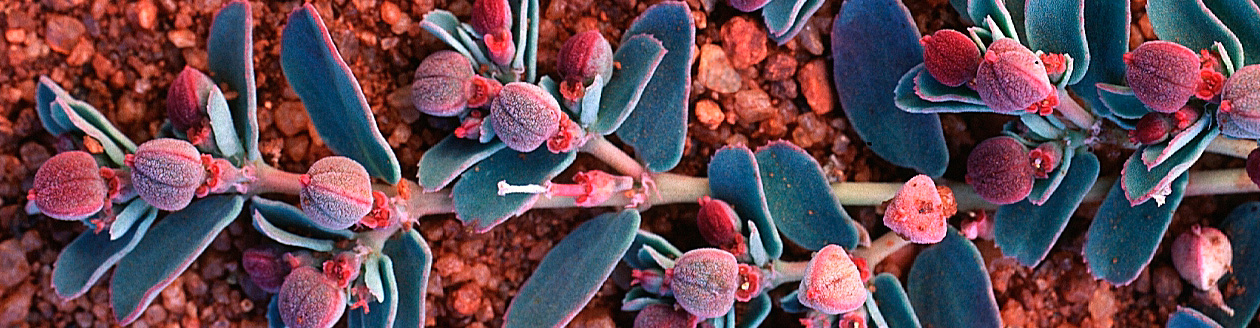
 

Our journal’s web-site banners

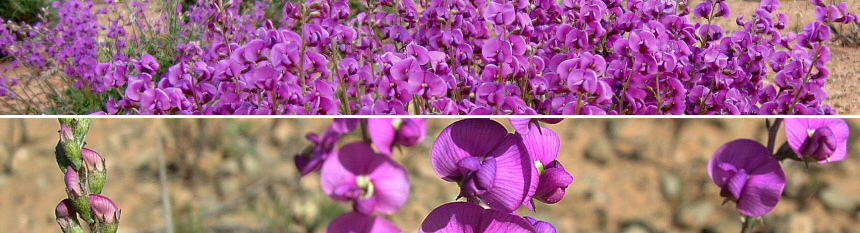
Swainsona formosa. Photo: H. Owens.

This year, the State Herbarium of South Australia‘s journal changed its name to Swainsona.

When browsing the new journal web-site, you might have noticed that there are changing banners at the top of the page. Each showing a different species of Swainsona. The journal was named after South Australia’s floral emblem, the Sturt desert pea (Swainsona formosa (G.Don) Joy Thomps., but there are about 85 species in the genus (see Joy Thompson’s revision of the genus, 17.7mb PDF). Some of these plants feature on Swainsona‘s web-site.

Below you can find a gallery of the banners that are used at the moment. If you click on the image, you will get more information from the SA Seedbank web-site. More images will be added in the future.

More information on the Australian states’ floral emblems can be found in an article by Sophie Ducker (1999, 930kb PDF) and on the Australian National Botanic Gardens web-site.

Swainsona canescens. Photo: SA Seed Conservation Centre.

Swainsona fuscoviridis & S. fissimontana. Photo: SA Seed Conservation Centre.

Swainsona fuscoviridis. Photo: SA Seed Conservation Centre.

Swainsona leeana. Photo: P.J. Lang.

Swainsona microphylla. Photo: R.J. Bates.

Swainsona oligophylla. Photo: R.J. Bates.

Swainsona pyrophila. Photo: SA Seed Conservation Centre.

Swainsona tenuis. Photo: SA Seed Conservation Centre.

Swainsona tephrotricha. Photo: D.N. Kraehenbuehl.

Swainsona stipularis. Photo: P.J. Lang.

Surveys of fungi on Kangaroo Island (2)

Note that Natural Resources Kangaroo Island have also published an illustrated leaflet on native fungi of Kangaroo Island, explaining 18 common fungi of the island (670 kb PDF).

Part 2. Truffles and truffle-like fungi

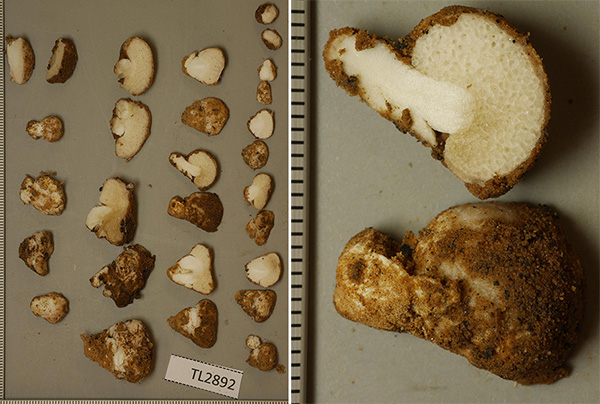
Three specimens of “Amylotrama”. Photo: D. Catcheside.

In 2017, the main foci of the annual survey of fungi on Kangaroo Island (22-29 June 2017) were not only on continuing with making lists of fungi at the different sites visited, but also on disc fungi, truffles and truffle-like fungi (2.6mb PDF) on collecting data for a project on the evolution of truffles.

The truffle-like Stephanospora (top) and an unknown species from the Cortinariales. Photo: D. Catcheside.

Truffle expert Teresa Lebel (National Herbarium of Victoria) made over fifty collections of truffles, some of which are very likely to be new species. These included three distinct species in the undescribed truffle-like genus “Amylotrama”. One was brightly coloured chrome yellow with red and blue staining, the other two were rather nondescript.

Amongst other interesting finds was a new species of the truffle-like genus Stephanospora and a strange little translucent pearlescent parachute-shaped fruit-body with dark chocolate spore bearing tissue. This last taxon was collected during last year’s survey on Kangaroo Island and preliminary DNA work on this collection gave a hint that it fitted in the Cortinariales. This is a very large order, and further work is needed to narrow down likely affinities.

A new species of truffle-like Amanita (previously known as Torrendia) was close to a species known from Western Australia, Amanita grandis, but does not conform completely to this taxon. It is a very fragile little white fungus, whose fruit-bodies were buried up to 3-4 cm and were very difficult to dig out of the ground intact as the volva and veils were stuck to the encasing soil and broke off easily.

A species of Amantia, possibly related to A. grandis. Photo: D Catcheside.

Four further collections were made for a project investigating the molecular basis of how truffle-like fungi, which fruit underground, have evolved from mushroom-like fungi. In Australia alone, this has happened at least 58 times in different genera over the past few million years.

The truffle-like habit reduces desiccation of fruit bodies and thus increases spore survival in arid conditions. Most such fungi are in a tripartite symbiotic association. They provide trees with water and minerals and small mammals, that find them by smell, with food. In turn the trees supply them with sugars and the small mammals disperse their spores. The genomes of twelve pairs of related fungi, one a truffle the other a mushroom, will be sequenced and the genes active during development of the fruiting body identified.  The project is supported by the US Department of Energy through the Joint Genome Institute and is conducted by an international team of mycologists led by David Catcheside (Flinders University).

Part 1 of this blog article can be accessed here.

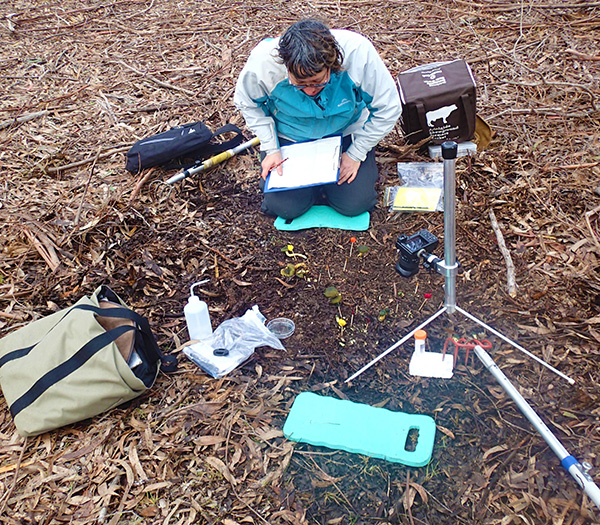
Mycologist Teresa Lebel collecting data and specimens for the “truffle project”. Photo D. Catcheside

Contributed by State Herbarium Hon. Associate Pam Catcheside.